

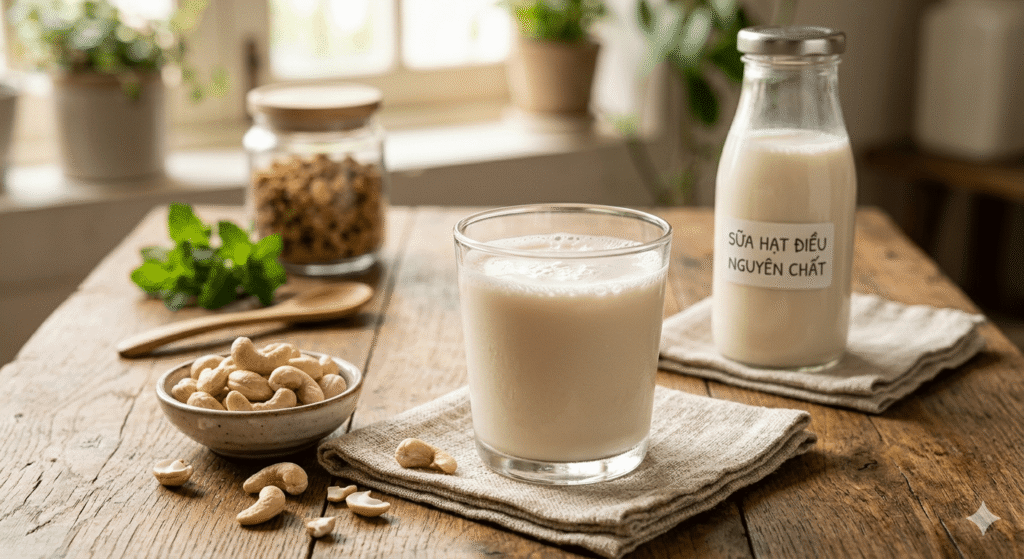
Vietnamese cashews: From raw export to opportunities for cashew milk in the US.
(November 21, 2025) Vietnamese Cashews: From Raw Export to Opportunities for Nut Milk in the US Market.
Cashew milk is trending in the US, benefiting from the clean eating trend, reduced cow’s milk consumption, and healthy lifestyles. Vietnamese businesses are quickly seizing this trend, leveraging their large raw material resources to participate in the high-end value chain, and the tariff removal on November 14th has opened up a golden opportunity for year-end exports.
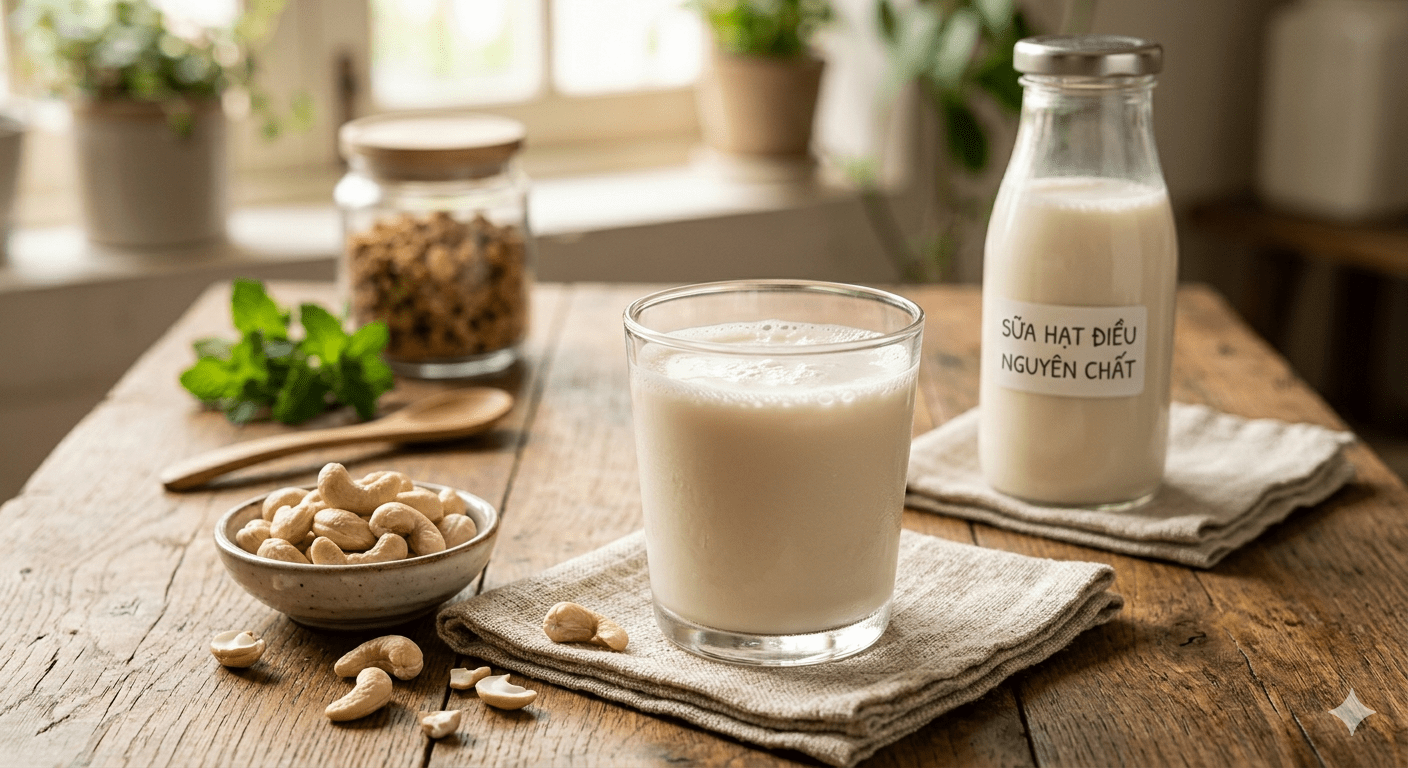
Cashew milk – a “new gateway” for Vietnamese cashews to penetrate deeper into the high-value food market.
In recent years, if you browse the “health foods” shelves at influential supermarket chains in the US, you’ll find that cashew milk has become a familiar choice. From a product once popular only among vegans or those pursuing an “organic” lifestyle, cashew milk is now competing on equal footing with almond milk or oat milk.
The growth of this market stems from several factors, including: a declining trend in cow’s milk consumption, a high rate of lactose intolerance, a demand for healthy eating, and a wave of sustainable and ethical consumption, especially among young people. Interestingly, behind every carton of cashew milk on American supermarket shelves, Vietnam is one of the most important raw material links. For many years, Vietnam has held a dominant market share in the import of raw cashews into the US.
Therefore, when the US decided to remove import tariffs on cashews from November 14th, the market viewed this as a rare “golden opportunity.” Not only will it help revive exports amidst a sharp decline in 2024, but this move will also open the door for Vietnamese cashews to penetrate deeper into high-value food segments, offering significantly more attractive profit margins compared to traditional raw exports.
For decades, Vietnam was known as the “cashew empire” with an overwhelming market share. But behind the glamour lies the reality that the raw export model has reached its limits. Domestic production is declining, businesses are heavily dependent on imports from Africa, and volatile prices are eroding profit margins.
At that time, the plant-based milk market, especially cashew milk, experienced rapid and stable growth. According to Grand View Research, the cashew milk segment alone reached over $218 million in 2023, with an expected growth rate of 7.3% per year until 2030. Although still a niche market, this is the fastest-growing segment thanks to the trend of vegetarianism, clean eating, and green living.
With its superior raw material advantages, Vietnam not only has the opportunity to regain market share of cashew kernels in the US, but can also participate more deeply in the global cashew milk production chain. The removal of US tariffs further strengthens this development potential, creating a foundation for the cashew industry to transform from a raw export industry to a strategic supplier of raw materials for high-value food products.
The US market – the tax shock, a favorable turning point to rewrite the growth cycle.
Since 2001, the US has consistently been the world’s largest importer of cashew nuts and also Vietnam’s most important market. For many years, Vietnam held over 75% of the market share, at times nearly reaching 90%. This is truly a rare achievement for an agricultural product.
However, 2025 began with a shock when the US maintained high tariffs from August 1st. Both Vietnamese businesses and American importers faced difficulties. Vietnam’s cashew exports to the US decreased by more than 17% in 10 months, with market share falling below 20%, the lowest level in many years.
Therefore, President Donald Trump’s decision on November 14th to remove tariffs on over 200 food items is seen as a “rescue” signal not only for the remaining months of the year but also for the entire 2025 cycle.
Data from the U.S. International Trade Commission (USITC) shows that U.S. cashew imports typically surge from July to December – the period leading up to the peak Thanksgiving, Christmas, and New Year holidays. Removing tariffs at this opportune time provides a strong impetus for Vietnamese cashews to quickly regain market share.
While the US remains a traditional market, China is emerging as the “new star.” In the first 10 months of the year, cashew exports to China increased by over 50%, surpassing even the US. China is also the strongest consumer market for the W180 line – the highest-end cashew segment. Geographical advantages and low transportation costs help Vietnamese businesses firmly establish themselves in this market during the peak Tet holiday season.
Furthermore, international organizations predict that China could surpass the US to become the world’s largest cashew market in the near future, helping Vietnam diversify and expand its growth potential.
Vietnam’s cashew industry is facing increasingly fierce competition from Ivory Coast and Brazil – countries that are investing heavily in deep processing to export high-value products. In this context, the “large-scale raw export” model is no longer sufficient to generate sustainable growth.
Therefore, the cashew industry’s path should be towards increasing the value of products such as roasted cashews, flavored cashews, healthy snacks, ready-to-eat products, and especially participating more deeply in the global food industry value chain, such as cashew milk.
Vietnam has the opportunity to transform from a “raw material empire” to a strategic supplier for high-value food products. This requires processing, trading, and exporting businesses to focus on investing in R&D, processing technology, quality standardization, traceability, and extensive cooperation with international food corporations.
The removal of US tariffs is only a short-term boost, but the greater opportunity lies in the shift in global consumption patterns towards healthy, green, and traceable food. This is a destination where Vietnam has a natural advantage. If this “golden opportunity” is well-utilized, the Vietnamese cashew industry can enter a new growth cycle, moving from exporting raw materials to high-value, high-priced products, and in the future, leading global consumption trends.
PV
Source: Government Newspaper
Related articles:
-
Cat Hoa Loc Mango – Vietnam’s Premium Mango Variety
-
Cavendish Bananas: potential and economic value
-
Fruit, vegetable exports to China climb to record $5.5B
-
Cambodia aspires to become the “world’s cashew capital” with its “cashew industrial park” project in Kampong Thom.
-
Why are Vietnamese cashews considered “the best in the world”?
-
Vietnam’s Cashew exports to China have surpassed $1 billion for the first time.
-
Vietnam’s Cashew exports exceeded $5 billion for the first time.