



Cavendish Bananas: potential and economic value
(Published onOctober 17, 2024) Cavendish Banana, are the most widely cultivated banana variety today. Primarily grown for export, Cavendish bananas have made a significant leap forward in the global banana and food industry.
Distribution area
Originating from South America, this banana variety is grown all over the world, including the Philippines, Costa Rica, Ecuador, Peru, Colombia, etc. The largest markets for South American Cavendish bananas are in Asia, such as China, South Korea, Japan, and Malaysia.
In Vietnam, the cultivation of this type of banana has spread throughout the country and is continuously expanding, stretching from North to South. The Southeast region is considered the “banana capital” and the largest exporter in the country, including provinces such as Dong Nai, Binh Duong, Ba Ria-Vung Tau, Tay Ninh, and Binh Thuan.
Fruit characteristics
The fruit, when ready for harvest, is green, slightly curved, and elongated. When ripe or after ripening, it turns bright yellow, smooth, with firm, not overly chewy flesh and a distinctive flavor. Therefore, thanks to its attractive and aesthetically pleasing characteristics, the South American Cavendish banana is favored by many people around the world.
South American ripe bananas can be stored for up to 40 days or 6 weeks thanks to their thick, hard peels that are less prone to spoilage, which can be an advantage in transporting them to foreign markets.
Plant characteristics
Soil requirements: South American Cavendish bananas are suitable for many soil types, but grow best in alluvial soils, basaltic red soils, etc., with a thick, loose, humus-rich topsoil layer, rich in nutrients, good moisture retention and drainage, and ideally a pH of 6-7.5.
Climate: The ideal temperature for banana growth is 25-35 degrees Celsius. Bananas can be grown year-round, but are usually planted more frequently at the beginning of the rainy season (May-June) to save on irrigation water. However, bananas require good drainage, so extra care should be taken to avoid waterlogging.
Harvest time: After planting, bananas can be harvested after 9-11 months (the harvesting time may also depend on the age of the seedling and the care given).
Growth characteristics: The plant has an average height of 300 cm (± 20 cm).
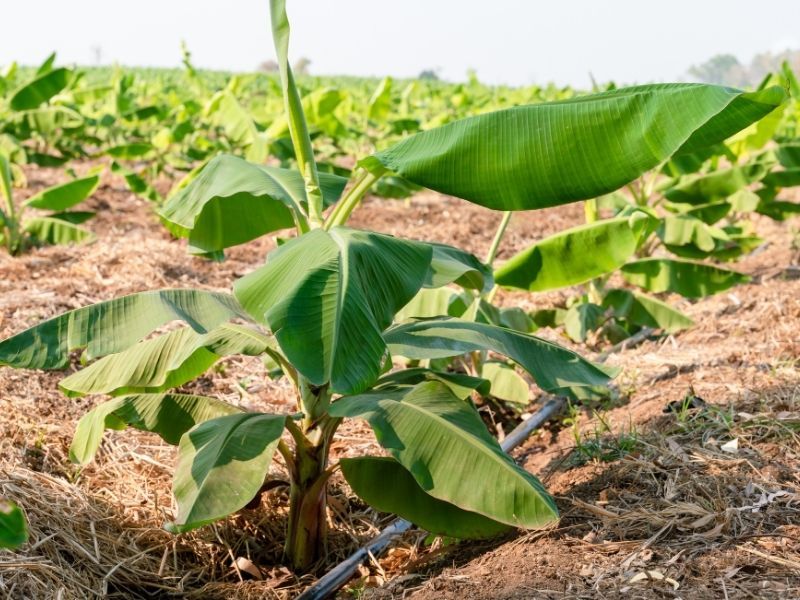
POTENTIAL AND ECONOMIC VALUE OF SOUTH AMERICAN BANANAS
Yield and fruit quality
South American Cavendish bananas have outstanding characteristics compared to other varieties, such as: thick stems, less prone to lodging, good disease resistance, rapid growth, strong vitality, and superior yield.
- Many shoots and fast-growing buds (≥ 5 shoots)
- The average cell weight is 32 kg (± 2 kg), with some “heavy-duty” cells weighing up to 80-90 kg each.
- Each bunch of fruit is heavily laden, with 9-12 hands per bunch.
- The fruit is 22 to 25 cm long.
- Its yield is superior to other varieties, averaging 90-110 tons/ha.
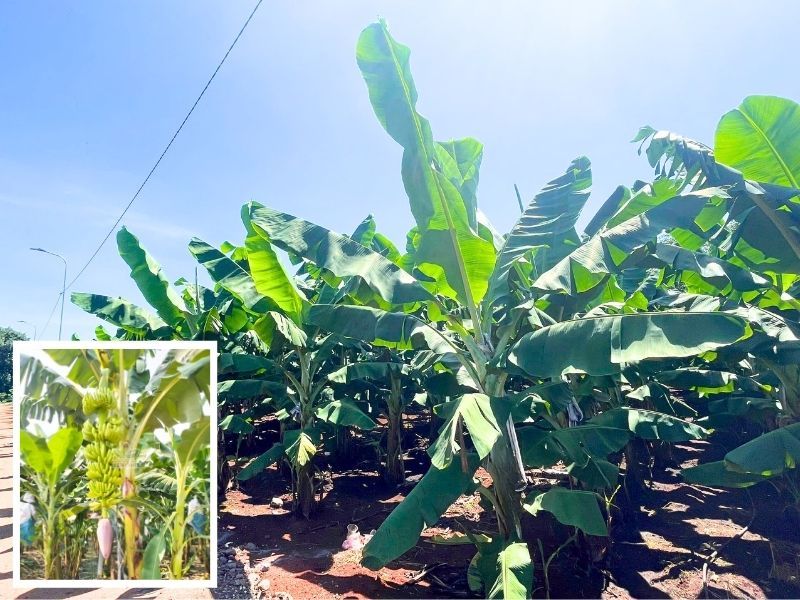
Domestic and export markets
Currently, Cavendish bananas hold a high export market share, and in some Southeast Asian countries, the export volume of South American Cavendish bananas is increasing sharply, such as in the Philippines, Thailand, Cambodia, and Laos.
In Vietnam, according to nongnghiep.vn : In the first two months of 2024, Vietnam became the largest supplier of bananas to the Chinese market, with a production volume of 173,000 tons, worth 70 million USD, accounting for 51.5% of the volume and 45.1% of the value of China’s banana imports. Not only has production increased, but the quality of Vietnamese bananas is also increasingly appreciated.
Economic benefits for farmers and businesses.
With a consistently large and year-round supply of seedlings, the South American Cavendish banana variety is well-suited for monoculture farming, capable of developing into large-scale, concentrated production areas spanning hundreds of hectares.
Each year, South American Cavendish bananas generate an average income of hundreds of millions of VND per hectare, thus significantly increasing the income of farmers and banana production businesses.
Processed banana products: South American ripe bananas are not only consumed fresh, but are also processed into many other products such as dried bananas, canned bananas, banana jam, etc.
Alongside the development of banana production, the parallel development of related industries such as processing, logistics, and services represents a new step forward in increasing production, boosting income, and creating more job opportunities.
Thus, we have explored ” South American Cavendish Bananas: Potential and Economic Value,” and we have gained some insight into the importance and economic potential this banana variety offers to farmers and businesses. Investing in the production, processing, and export of Cavendish bananas will contribute to increased income, job creation, and sustainable development of the agricultural sector. With its natural advantages, improved seedlings, and expanding market, the South American Cavendish banana deserves further attention and development in the future.
Author: Vietplants
- Cavendish Bananas: potential and economic value
- Vietnam’s Cashew exports to China have surpassed $1 billion for the first time.
- Vietnam’s Cashew exports exceeded $5 billion for the first time.
- Vietnamese cashews: From raw export to opportunities for cashew milk in the US.
- Why are Vietnamese cashews considered “the best in the world”?
Related articles:
-
Fruit, vegetable exports to China climb to record $5.5B
-
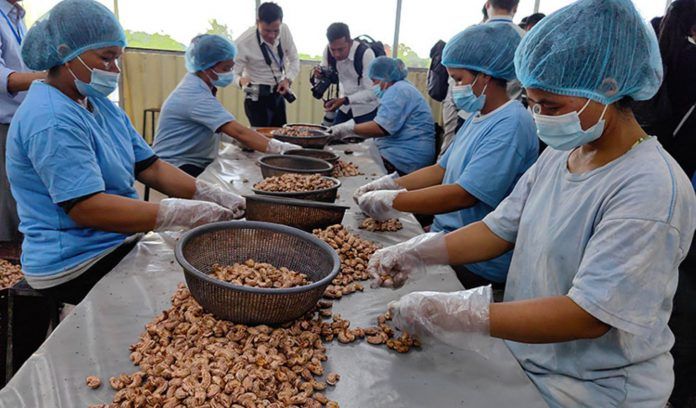
Cambodia aspires to become the “world’s cashew capital” with its “cashew industrial park” project in Kampong Thom.
-
Why are Vietnamese cashews considered “the best in the world”?
-
Vietnamese cashews: From raw export to opportunities for cashew milk in the US.
-
Vietnam’s Cashew exports to China have surpassed $1 billion for the first time.
-
Vietnam’s Cashew exports exceeded $5 billion for the first time.